
"estimated output"
400 article(s) found

Ethiopian Coffee Flavor description of unique quality; introduction to the processing methods for the characteristics of grinding degree of taste
This kind of coffee grows in areas ranging from 1500 to 2200 meters above sea level. This coffee is washed in a clear stream, carefully selected by hand and exposed to plenty of sunshine. The taste is unique; the fruit is medium-sized, comparable to Mocha. The taste is mellow, the charm is unique, it gives people a fresh feeling, and the market prospect is optimistic. It is estimated that this kind of coffee is average in 42000 hectares of cultivated area.

Introduction of Grinding degree of Coffee Flavor description and treatment in Xidamo Chiso producing area of Ethiopia
Even the official research unit of Ethiopia does not know how many Arabica subspecies there are in Ethiopia. The coffee cooperatives in this mountain are certainly different from those planted in another mountain, and even small farmers in the same region grow different varieties of coffee. It has been estimated that there are at least 2000 varieties of Ethiopian coffee and even more than 4500 kinds of coffee. Compared to the southern neighbor

How much coffee is produced in Indonesia in a year? which brand is the best to buy coffee in Indonesia?
For more information on coffee beans, follow the coffee workshop (official Wechat account cafe_style). According to Pranoto Soenarto, vice president of the Indonesian Coffee exporters and Industry Association, coffee production in the country is expected to increase by 50 to 60 per cent in the next five years. He even accepted it on the sidelines of an industrial seminar held in Bandung.

South Korea is the largest exporter of Yunnan coffee
According to the Yunnan Coffee Association, South Korea imports an average of 2000 tons of coffee from Yunnan every year, making it the largest exporter of coffee from Yunnan. Yunnan Province has a coffee planting area of more than 800,000 mu, with an annual output of more than 60,000 tons, accounting for 98% of the country's total. The products are sold in 31 countries and regions, including the United States, South Korea and Southeast Asia, among which South Korea has become the largest exporter of Yunnan coffee because of its market and tariff advantages.

South Korea becomes the largest exporter of Yunnan coffee
According to the Yunnan Coffee Association, South Korea imports an average of 2000 tons of coffee from Yunnan every year, making it the largest exporter of coffee from Yunnan. Yunnan Province has a coffee planting area of more than 800,000 mu, with an annual output of more than 60,000 tons, accounting for 98% of the country's total. The products are sold in 31 countries and regions, including the United States, South Korea and Southeast Asia, among which South Korea has become the largest exporter of Yunnan coffee because of its market and tariff advantages.
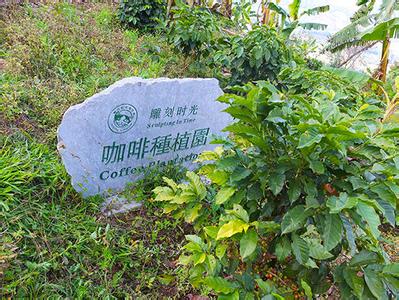
The global output of raw coffee beans in 2016 increased by about 1.4 million bags over last year.
The global output of raw coffee beans in 2016 increased by about 1.4 million bags over last year. Brazil is still the top coffee producer in the world, followed by Vietnam, the high producer of Robusta. Although Arabica is more fastidious about its growing environment, due to market demand, the output of Arabica this year is still much higher than that of Robusta, and the proportion is close to 7:3 in terms of global coffee consumption.
Inspection and quarantine should be carried out in the planting base of plant-derived food raw materials for export.
The main safety and health problems of exported plant-derived food raw materials are excessive pesticide residues and harmful elements, which mainly occur in the planting stage. In order to control the safety and quality of plant-derived food raw materials for export during the planting stage, AQSIQ recently issued a notice (National quality Inspection letter [2008] No. 261) requiring further standardization of inspection and quarantine preparations for export plant-derived food raw materials planting bases.
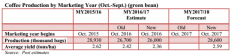
Vietnam Coffee Annual report 2017
Main points of the report Vietnam coffee production in 2016 / 17 was revised from 26.7 million bags to 26 million bags due to abnormal rainfall during the harvest season, resulting in a smaller than expected yield. The weather conditions were good in the first half of the year, with an estimated production of 28.6 million bags, an increase of 10 per cent over the 17th of 2016. The abundant rainfall from January to March makes the coffee tree send out more branches and bloom.
Coffee production in Yunnan plummeted by 40% in 2013-2014
In late March, the coffee bean harvest season of 2013-2014 is coming to an end. Under the impact of natural disasters and sudden changes in prices, the confidence of Yunnan farmers has been undermined. Some farmers have given up picking and their output has plummeted by 40%.

Different flavor of coffee beans selected by small farmers of Vivette Nanguo in Guatemala
Professional barista exchanges please follow the coffee workshop (Wechat official account cafe_style) Guatemala Vivette Nanguo Sustainable Coffee Association small farmers select beans Guatemala is a Central American country with a long tradition of producing high-quality coffee, mainly due to volcanic geology, coffee has saved the Guatemalan economy in the past century, it is estimated that there are currently

AEKI: domestic output is unstable. The total export of coffee this year is only 350000 tons.
The Central Java Branch of the Indonesian Coffee exporters Association (AEKI) claims that China's coffee exports to some countries are still hampered by unstable domestic production. MulyonoSusilo, chairman of the central claw branch of AEKI, said in Sanbaolang recently: in fact, the demand of the world's largest coffee consumer has not declined, but coffee imports are due to China's inability to guarantee the sustainability of production.
Demand for coffee in Europe began in the 17th century with charcoal coffee stoves
In the 17th century, demand for coffee emerged in Europe, and small quantities of roasted coffee beans began to be imported to Yemen. In the 18th century, coffee shops were everywhere in Europe, coffee consumption soared, and Yemeni mocha alone was no longer enough. It is estimated that Yemen's coffee bean production in 1970 was about 20,000 tons, which is already insufficient to meet the newly emerging European demand. Bean prices remain high,

The emergence of coffee demand in Europe began in the 17th century
In the 17th century, there was a demand for coffee in Europe and began to import small quantities of roasted coffee beans from Yemen. In the 18th century, with the fragrance of European cafes and the sharp increase in coffee bean consumption, the Yemeni mocha alone was no longer enough. It is estimated that the output of coffee beans in Yemen in 2007 ○○ is about 20, 000 tons, which is stretched to meet the rising demand of Europe. The price of beans is high and the port of Mocha is busy.

Guatemala Vivetnam Fruit producing area Sustainable Coffee Association small Farmers' selection of beans
Guatemala Vivette Nan Fruit region Sustainable Coffee Association selected beans Guatemala is a Central American country with a long tradition of producing high-quality coffee, mainly due to volcanic geology. Coffee has saved the Guatemalan economy in the past century, and it is estimated that there are about 120000, 000 producers there, making it a major export item. Vivette Nango

2019 Coffee Market Forecast: the price of coffee beans has fallen sharply, and the output may be reduced.
Professional coffee knowledge exchange more coffee bean information Please follow coffee workshop (Wechat official account cafe_style) Coffee bean prices plummeted in 2018, making it cheaper for companies selling coffee-related products, but bitter for farmers, but this situation may reverse in 2019, because the price drop has caused coffee farmers to plant less. Coffee bean farmers are having a hard time because of Arabica
Coffee beans "would rather have balls".
Thousands of years ago, when Chen Sheng and Wu Guang rose up, he shouted: how dare a prince? Of course, it sounds very pleasant to us, who have long been used to the idea of equality for all, but if this sentence is put on the coffee beans, it is estimated that the beans will jump out and object: we all have to talk about our origins! In our opinion, they are all small black charcoal-like coffee beans, in senior coffee.

An introduction to the taste of high-quality coffee beans in the aftertaste of Ethiopian coffee flavor manor.
A large amount of coffee production (95%) is done by small shareholders, with an average yield of 561 kg per hectare. For centuries, minority holders of Ethiopian coffee farms have been producing a variety of high-quality types of coffee. The secret of producing high-quality coffee is that coffee growers have developed environmental conditions through generations of repeated learning about the coffee planting process.

Taste of Burundian Coffee Flavor Manor area introduces Burundian boutique coffee beans
After the price of Burundian Arabrica coffee was raised, the purchase price of fresh coffee in Burundi was adjusted from 120 Burundian francs / kg to 200 Burundian francs / kg, which is excellent news for countries where coffee export earnings account for more than 80 per cent of total foreign exchange earnings. Due to the abundance of Rain Water in the coffee growing season and good field management, 2004

Honduran coffee has an amazing taste and output. Honduran coffee is round and complex.
For the exchange of professional baristas, please follow the coffee workshop (Wechat official account cafe_style) Honduras Bandisi Farm Mi Bendicion in Honduras. Many people do not know that the coffee production in Honduras is amazing. After 2011, Honduras has surpassed Guatemala to become the seventh largest coffee producer in the world (Guatemala 10th) ranking before it.

Description of taste and flavor in coffee farm area of Ethiopia grinding scale varieties
Readers interested in the grinding scale varieties of Ethiopian boutique beans can pay more attention to the producing areas of Sidamo, Yegashefi (especially rare sun-dried beans), Harald, Lim and Jinbi, whose rich orange and floral aromas are different from those of Central and South American beans. Ethiopia is a treasure trove of coffee genes, and experts estimate that it is hidden in the territory.